
Diagnoses Process
Understanding how Multiple Sclerosis is diagnosed and what to expect along the way.

Understanding the Journey to an MS Diagnosis
Receiving an MS diagnosis can take time, and the process may feel uncertain or overwhelming. Because MS affects everyone differently, there is no single test that can confirm a diagnosis.
Understanding the steps involved can help you feel more informed and prepared. Here, we explain how MS is diagnosed, the tests you may encounter, and where to find support.

The Diagnosis Process
-

Talk to Your GP
If you're experiencing unexplained symptoms that could be associated with MS, your first step is to speak with your GP.
It can be helpful to keep a record of your symptoms, including when they occur, how long they last and how they affect your daily life.
-

Referral to a Neurologist
If your GP suspects MS, they may refer you to a neurologist for further assessment.
The neurologist will review your medical history, discuss your symptoms and determine which tests may be appropriate.
-

Tests and Investigations
Several tests may be used to help identify MS and rule out other conditions.
These may include MRI scans, lumbar punctures and evoked potential tests.
-

Understanding Your Results
Your neurologist will review the results alongside your symptoms and medical history.
In some cases, a diagnosis may be confirmed relatively quickly. For others, further investigations or monitoring over time may be necessary.


Common Tests for MS
MRI Scans
Magnetic Resonance Imaging (MRI) creates detailed images of the brain and spinal cord.
These scans can help identify areas of inflammation or scarring associated with MS.
Lumbar Puncture
A lumbar puncture involves collecting a small sample of fluid from around the spinal cord.
This fluid can be tested for changes that may help support an MS diagnosis.
Evoked Potential Tests
These tests measure how quickly electrical messages travel between the body and brain.
They can help identify delays in nerve signals that may be associated with damage to the protective covering of nerves.
What is Clinically Isolated Syndrome (CIS)?
Sometimes a person experiences an episode of neurological symptoms that may suggest MS, but there isn't enough evidence to confirm a diagnosis.
This may be described as Clinically Isolated Syndrome (CIS).
Not everyone diagnosed with CIS will go on to develop MS. Your healthcare team may recommend ongoing monitoring to identify any changes or new symptoms.

We're Here to Support You
You Don't Have to Navigate MS Alone
Whether you're waiting for a diagnosis, have recently been diagnosed or are supporting someone close to you, MS South Canterbury is here to help.
Our Community Advisor can provide information, practical guidance and emotional support, helping you understand your options and connect with the right services.
Where appropriate, we may also be able to attend specialist or neurology appointments with you.



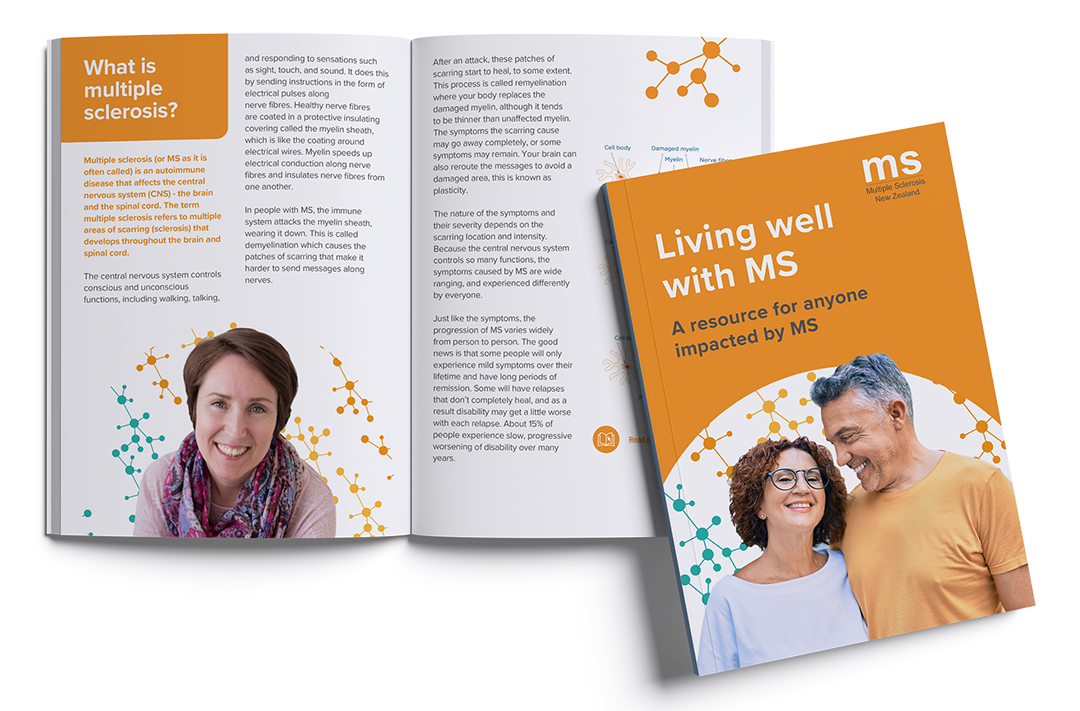
Living Well with MS
A helpful guide from MS New Zealand for anyone affected by Multiple Sclerosis. Discover practical information about understanding MS, managing symptoms, treatment options, and everyday living, along with advice and resources to help you navigate life with MS.
Stay Connected
Receive updates, resources, community news, and upcoming events.